

🧠 INSiGHT Scans
See exactly what’s happening with your child’s nervous system in just minutes
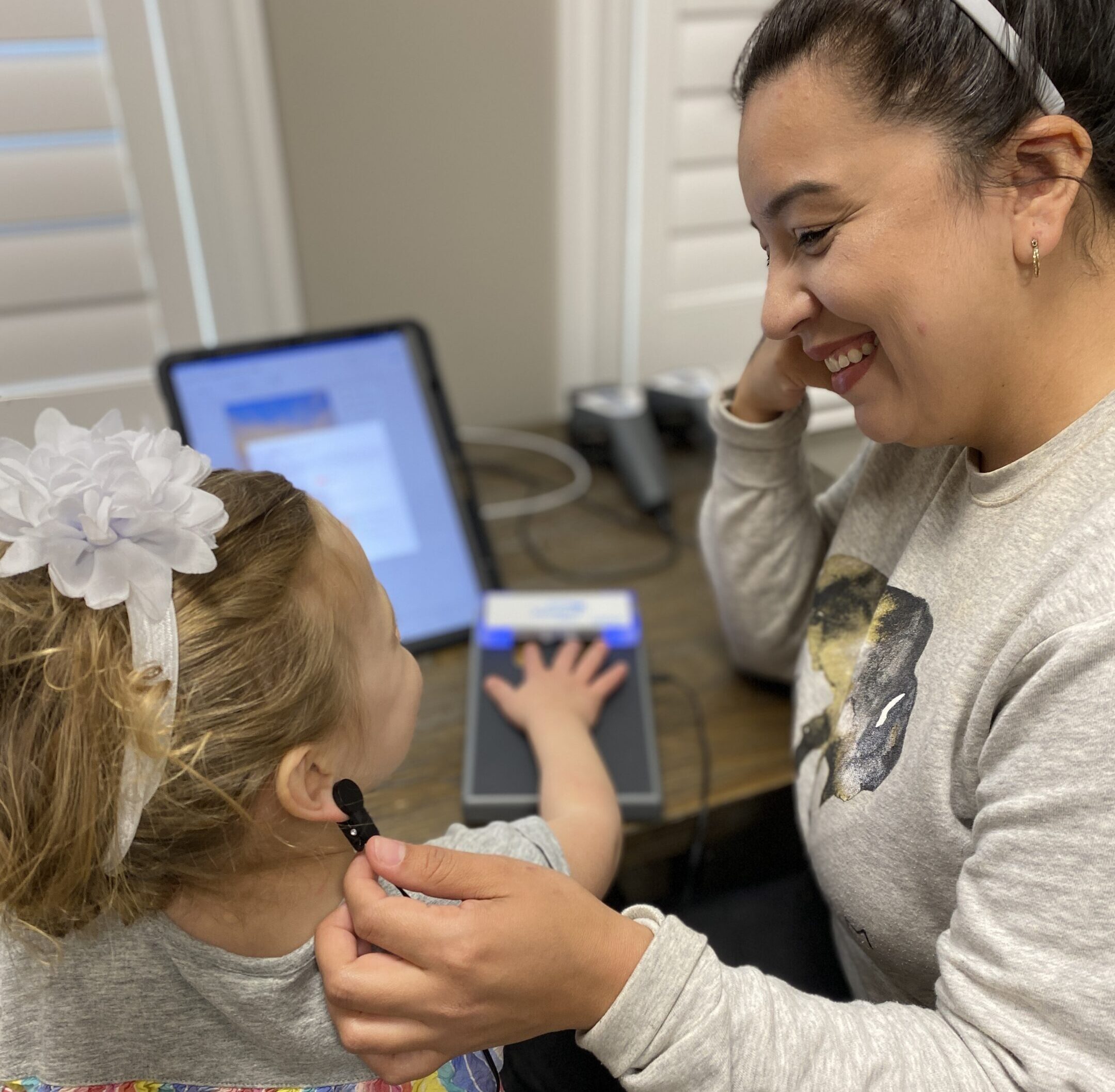
State-of-the-art INSiGHT scanning technology in our office
If you’re like most parents we meet at Alive & Free Chiropractic, you’ve already tried a lot—pediatrician visits, specialist appointments, maybe even some therapy sessions. And yet here’s what’s been missing: a clear picture of how your child’s nervous system is actually functioning. INSiGHT Scans give you objective data about what’s really going on—no guessing, no waiting to see if they “outgrow it.”
🧠 Your Child’s Nervous System: The Missing Piece
Think about everything you’ve been working on—the digestion issues, the sleep struggles, the meltdowns, the focus problems. Here’s what connects them all: your child’s nervous system. It runs the show for everything—digestion, sleep, immune function, behavior, learning, emotions, all of it. As Dr. Bruce Lipton puts it, “The nervous system’s primary role is to sense the surrounding environment and control the activity of every other cell in the body.”
So while you’ve been working on your child’s gut health, immune system, and development—their healthcare team may have completely overlooked the one system that controls it all. What makes INSiGHT Scans different is that we measure the autonomic nervous system—the stuff that happens on autopilot. Things like eating, sleeping, pooping, and moving—the four basic functions every healthy child should do naturally. Our scans show us exactly how well (or not-so-well) that system is working.
⚡ How It All Works
Your nervous system is basically a two-way street. One set of nerves sends information up to the brain—telling it what’s happening inside the body and around you. The other set sends signals back down—telling different parts of the body what to do and when. We’re talking about communication across 37.2 trillion cells, at speeds far faster than 5G. We definitely can’t have our kids running on dial-up.
A baby’s brain literally doubles in size during the first year of life and keeps developing rapidly through ages 3–7. Making sure this communication system is working right is hands-down the most important thing any pediatric healthcare provider should be checking—and it’s almost always the thing that gets skipped.
🔬 What We’re Looking For
INSiGHT Scans help us find subluxation and dysautonomia—which basically means your nervous system has developed three interconnected problems: signals aren’t getting through clearly, the system is stuck in “fight-or-flight,” and the body’s natural healing is being blocked. When we spot them, we need to know where along the nervous system the stress is and how serious the dysfunction is. Think of it like your home’s electrical panel—when there’s an overload, we can track exactly which circuit is affected.
Communication Breakdown
Signals aren’t getting through clearly
Stuck in Stress Mode
System is locked in “fight-or-flight”
Can’t Heal Properly
Body’s natural recovery is blocked
Here’s what it looks like when your child’s nervous system is stressed out and stuck in fight-or-flight:
- Tummy troubles (colic, reflux, constipation)
- Always getting sick (ear infections, colds that won’t quit)
- Sleep problems (can’t fall asleep, wakes up constantly)
- Big emotions (meltdowns, can’t calm down)
- Delays (motor skills, speech, sensory stuff)
- Focus challenges (can’t sit still, super distracted)
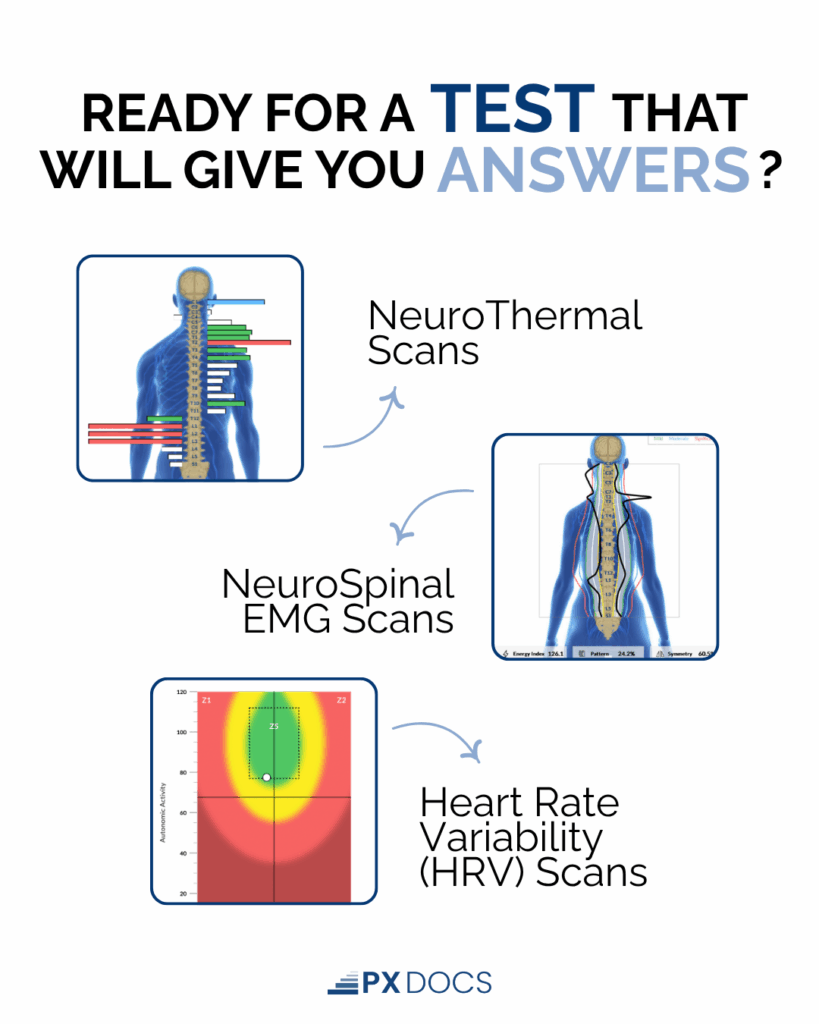
The three types of INSiGHT Scans we use in our practice
Three Scans. One Complete Picture.
NeuroThermal
Maps temperature differences along the spine to show where nervous system stress is concentrated—key for digestion, sleep, and immune issues.
NeuroSpinal EMG
Measures muscle tension and neuromotor balance along the spine—the most important scan for sensory challenges, ADHD, autism, and anxiety.
Heart Rate Variability
Shows whether your child’s nervous system can adapt and recover—or is stuck in a constant state of stress. Big picture health in one scan.
🌡️ NeuroThermal Scanning
This is the first scan we do, and we can use it on everyone from day-old babies to parents—it takes just a few minutes and is completely safe. The NeuroThermal Scan measures temperature differences along the spine to show where stress is concentrated. Since your autonomic nervous system controls digestion, immune function, hormones, and more, this scan gives us real insight into what’s happening for kids dealing with colic, reflux, constipation, ear infections, allergies, and sleep issues.
Three Things We Don’t Want to See:
- Uneven Temperatures: Big differences between the left and right sides of the spine
- Stress Hot Spots: Areas where the nervous system is clearly fired up
- Multiple Problem Areas: Several spots along the spine acting up at once
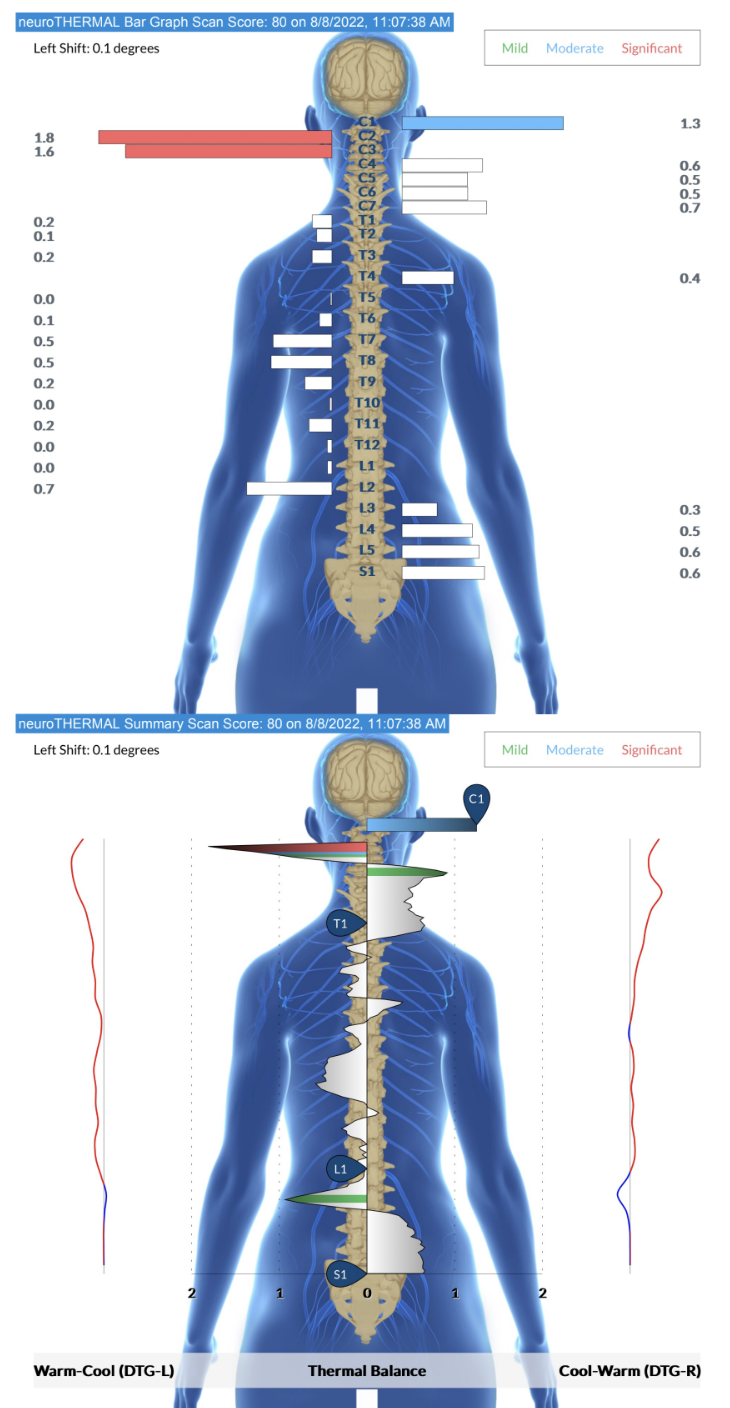
Example NeuroThermal scan showing temperature variations along the spine
Before and after scans showing improvement with care
⚡ NeuroSpinal EMG Scanning
This is the most important assessment we do for autism, sensory processing, ADHD, and anxiety. These challenges all come from stuck tension and exhaustion in the neuromotor system—and if you’ve worked with PT, OT, or speech therapy, you’ve heard the word “tone” constantly. Motor function and brain function are directly connected: when the EMG shows stuck tension and imbalance, the brain is almost definitely stuck in stress mode too, which affects emotions, behavior, learning, and memory.
Three Common Patterns We See
- The “Raging Bull” (High Energy): The whole neuromotor system is locked in fight-or-flight. This messes with movement development, sleep, behavior, emotions, digestion—basically everything.
- The “Drunken Bull” (Low Pattern/Symmetry): Low scores here mean struggles with emotional regulation, sensory processing, coordination, and digestion.
- Mixed Patterns: High energy plus low organization scores—this shows complex dysfunction that needs comprehensive care.
How We Score the EMG
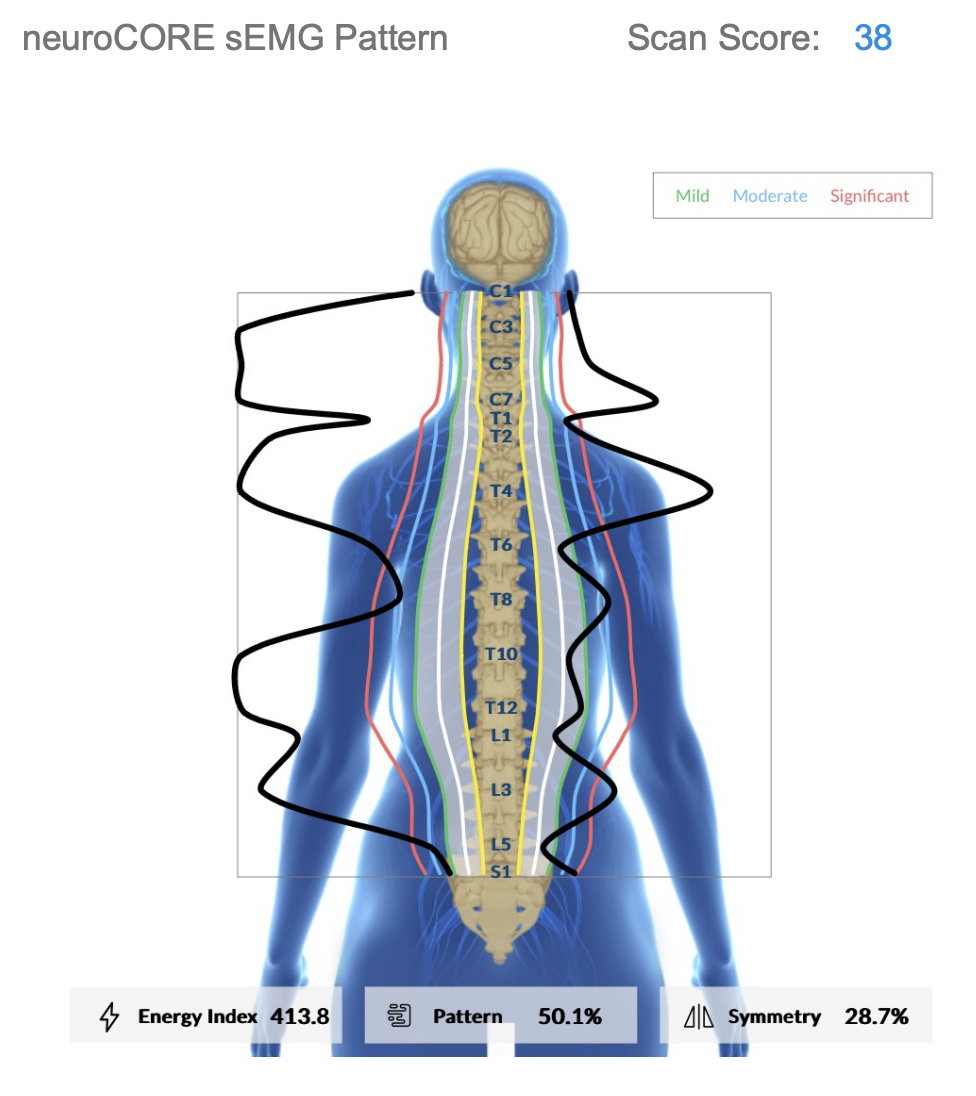
Our INSiGHT EMG Scans give us three numbers that tell us what’s really happening:
Total Energy
How stressed and fired up the nervous system is (ideally around 100)
Pattern Score
How organized and coordinated the signals are
Symmetry Score
How balanced left and right sides are

EMG scan showing neuromotor system balance and energy levels

Comparative EMG scans tracking progress over time
❤️ Heart Rate Variability (HRV) Scanning
These scans give us the big picture of your nervous system health. The number one sign of a healthy nervous system is the ability to adapt and bounce back—that’s true for gut health, immune health, emotions, behavior, all of it. Good health isn’t about avoiding stress; it’s about being able to handle it and recover. Many parents tell us they want their kids to be more flexible and less rigid about routines. The HRV Scan shows us exactly why that flexibility isn’t there yet—and then we watch it improve as the nervous system heals with adjustments.
What We Usually Find
Most HRV scans show two common patterns from subluxation:
Stuck in Stress Mode
Nervous system can’t shift out of “go go go”
Can’t Adapt
Hard to switch between stressed and relaxed states
Just like babies don’t actually outgrow colic—they often develop sensory and spectrum challenges instead—the same goes for stress patterns we see on HRVs. Kids don’t outgrow tantrums and behavior issues. They turn into ADHD, anxiety, and sometimes depression. HRV Scans are especially helpful for mental and emotional struggles, sleep problems, and energy issues. Without these scans, we’d just be chasing symptoms like everyone else.
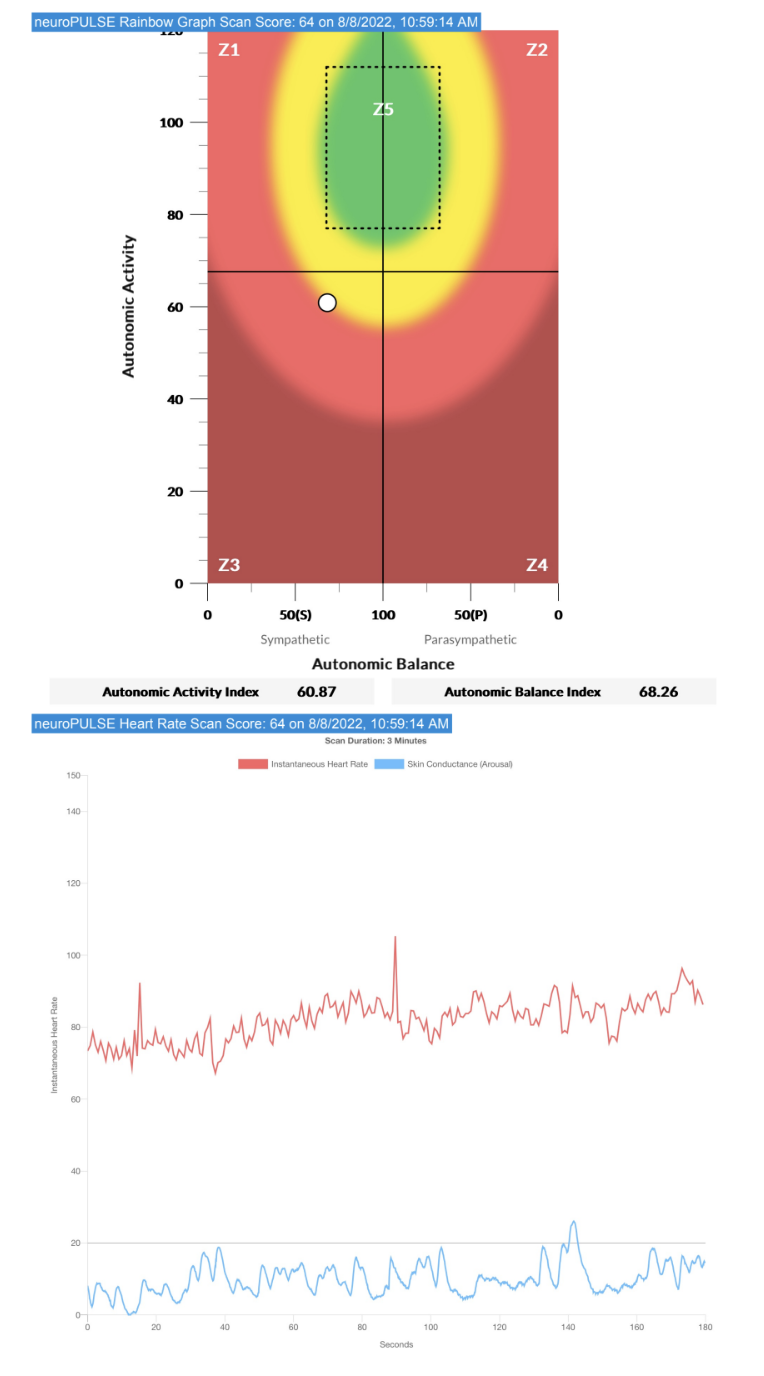
HRV scan showing nervous system adaptability and stress response
HRV patterns showing improvement in nervous system balance
🧩 Putting It All Together
Your chiropractor will walk you through each scan, but here’s the really cool part: putting them all together gives us a complete picture of what’s happening with your nervous system and overall health. INSiGHT Scans do exactly what the name says—they give us insight into the most important part of your family’s health in a way no other healthcare provider can.
Your nervous system is literally the command center for your whole body, keeping everything running 24/7. Just like busy parents managing a household, it can get wound up and worn out. The good news is it doesn’t have to stay that way. With a customized Care Plan and consistent adjustments, you’ll see the stuck stress leave the body—and watch the calm, relaxation, and healing kick in.
Watch Dr. Tony explain how INSiGHT scanning technology works
We’re excited for you to experience the transformation that only this approach to chiropractic care can deliver.
Experience INSiGHT Scans at Alive & Free Chiropractic
See exactly what’s happening with your family’s nervous system—and unlock the health you’ve been searching for.
Schedule Your INSiGHT Scan Today